


Refine your search

Free Cancellation
Book your activity worry-free!
Price
Categories
Duration
Time

Select Your Experience




Historical Places in Oman

Private Transfer from Falaj Darees Hotel to Muscat Airport (MCT)

Overnight Desert Tour with Wadi Bani Khalid

Private Evening Trip To Nizwa
4 Days Package TOUR FARAH

Nizwa full day ( time of a day )

Nizwa full day (Holidays )

2 Days Tour TOUR FATIMA

Game Fishing in Muscat

Nizwa full day (outdoor and adventure)

TOUR ALADIN 11 Day Tour with Musandam
Experience The Best Things To Do Around The World
Explore More Things to Do in Various Destinations
Discover Oman Through Various Categories
Experience More Amazing Activities In Oman
Ancient Trails: Exploring the Historical Places in Oman
Oman wears its history lightly, with old forts perched over date palm oases and stone-built towns tucked into mountain folds. You step into courtyards that still smell of frankincense, climb towers once used to watch caravan routes, and wander lanes where copper traders haggled centuries ago. From Bronze Age tombs to gleaming museums, the historical places in Oman invite you to slow down, listen to the wind, and feel how stories linger in stone. If you enjoy calm, culture, and a touch of desert romance, these historical places in Oman will suit you perfectly.
You’ll come across names that naturally sit on any list of historical places in Oman: Nizwa Fort, Bahla Fort, Jabrin Castle, the twin sentinels of Al Jalali and Al Mirani, and UNESCO-listed sites such as the beehive tombs of Bat, Al Khutm and Al Ayn, and the ancient city of Qalhat. In Muscat, the National Museum of Oman and Bait Al Zubair give context to everything you see outside. Down south, Al Baleed Archaeological Park ties the coast to the frankincense trade that once scented royal courts.
Plan your route by region, keep a little time for cafés and souqs, and fold in some gentle activities between sites. With good roads and friendly locals, you’ll leave with a quiet appreciation of how tradition shapes everyday life.
Historical Places in Oman
Forts and Castles
Nizwa Fort
Thick, honey-coloured walls rise above the old souq, and the round tower gives you a full sweep of mountains and palms. You wander past date storage rooms and cooling shafts that tell you this was more than a military post; it was a living place. The museum displays are simple and clear, useful if you’re starting your journey through the historical places in Oman. Come early, when the light is soft and the city is still waking. After your visit, you can walk straight into the market for coffee and halwa.
Historical Background: Built in the 17th century by Imam Sultan bin Saif Al Ya’rubi to protect trade and faith, the fort anchored an important centre of learning and governance.
Key Highlights: Massive circular tower, gun ports, trap stairs, small ethnographic exhibits, rooftop views over Nizwa’s old quarter.
- Timing: Typically 9:00 AM to 4:00 PM Sat–Thu, shorter hours on Fri morning.
- Ticket and Price: Usually INR 900 to INR 1,200 per adult.
- Location: Nizwa, Ad Dakhiliyah.
Bahla Fort
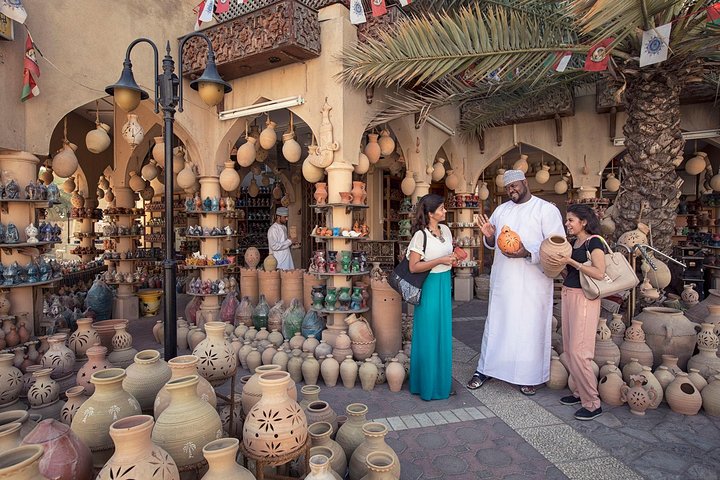
An enormous mud-brick stronghold sits behind palm groves, its edges softened by centuries of sun. You follow walkways along the ramparts, peer into storerooms, and sense why this UNESCO site anchors many itineraries focused on historical places in Oman. The town outside moves at an easy pace; potters’ wheels still spin and the scent of clay hangs in the air. Views from the upper walls stretch towards the Jebel Akhdar range.
Historical Background: Originating between the 12th and 15th centuries under the Banu Nebhan dynasty, the fort guarded caravan lines and local craft towns.
Key Highlights: Long defensive walls, restored keep, quiet courtyards, pottery traditions in the nearby souq.
- Timing: Commonly 9:00 AM to 4:00 PM Sat–Thu, limited Fri hours.
- Ticket and Price: Usually INR 400 to INR 700.
- Location: Bahla, Ad Dakhiliyah.
Palaces and Citadels
Jabrin Castle
Rooms open one into another like a slow-paced story, with painted ceilings, carved doors, and niches for lamps. You climb narrow stairways and step onto breezy terraces where scholars once discussed theology and poetry. The castle’s elegance balances the ruggedness of nearby forts, which is why many travellers rate it among their favourite historical places in Oman. Take your time with the calligraphy and the old date presses; the details make it special.
Historical Background: Built in the late 17th century as a residential palace by Imam Bil’arab bin Sultan, later fortified during regional conflicts.
Key Highlights: Decorative ceilings, wooden mashrabiya, sunlit courtyards, date storage rooms, views across the plain.
- Timing: Typically 9:00 AM to 4:00 PM Sat–Thu.
- Ticket and Price: Usually INR 600 to INR 900.
- Location: Jabrin, near Bahla.
Al Jalali and Al Mirani Forts
Two cliff-top guardians frame Muscat’s old harbour, their stone forms catching the late afternoon glow. You stand on the Corniche and look up, imagining watchmen scanning the water for sails. Access inside is limited, yet the exterior presence is powerful, and the area around makes a gentle circuit when you are tracing historical places in Oman. The sea breeze, the echo of calls from the harbour, and the curving bay create a scene you will remember.
Historical Background: It was originally built in the 16th century during the Portuguese period, and later adapted by Omani rulers to secure the harbour and palace quarter.
Key Highlights: Dramatic coastal silhouettes, viewpoints, historic harbour lines, photo stops near the ceremonial quarter.
- Timing: Exterior viewpoints accessible throughout the day; interior access varies.
- Ticket and Price: Viewing from outside is free.
- Location: Old Muscat harbour, Muscat.
UNESCO Archaeology and Ancient Settlements
Bat, Al Khutm and Al Ayn Beehive Tombs
On stony ridges, dozens of Bronze Age tombs rise like small towers against the sky. The landscape is quiet, the colours shifting from grey to gold, and you can feel time stretching back four thousand years. Visiting here adds depth to any journey through historical places in Oman, because you sense the roots beneath the forts and cities. Wear good shoes; the ground is uneven and the light can be strong at midday.
Historical Background: Dating to the 3rd millennium BCE, these dry-stone tombs mark an extensive necropolis linked to early oasis communities.
Key Highlights: Beehive-shaped tombs, ridge-top walks, broad views of arid valleys.
- Timing: Open access during daylight; plan for cooler hours.
- Ticket and Price: Free entry.
- Location: Near Bat and Al Ayn, Al Dhahirah.
Ancient City of Qalhat and Bibi Maryam Mausoleum
Ruins overlook a rocky coastline where traders once sailed to India and East Africa. The remains are modest, yet the sense of place is strong, and the Bibi Maryam structure still carries quiet grace. If you photograph thoughtfully and tread lightly, your stop here will round out the coastal side of the historical places in Oman. The sea air, the gulls, and the sound of waves create a calm rhythm.
Historical Background: A key port from the 11th to 16th centuries, Qalhat flourished under the Hormuz kingdom; Bibi Maryam’s mausoleum is linked to a powerful patroness.
Key Highlights: Coastal ruins, surviving arches, sea views, ties to long-distance maritime trade.
- Timing: Daylight visits recommended.
- Ticket and Price: Often free or a small local fee.
- Location: Qalhat, Ash Sharqiyah.
Museums and Heritage Houses
National Museum of Oman
Wide, light-filled galleries guide you from early human presence to modern statehood. Textiles, coins, ship models, and ritual objects are displayed with care, so you understand what you’ll see outdoors at other historical places in Oman. The building itself feels serene, a good pause on a hot afternoon. You step out better prepared for the forts, tombs, and old towns on your list.
Historical Background: Established to present Oman’s cultural narrative, bringing together archaeology, maritime history, and ethnography under one roof.
Key Highlights: Maritime heritage halls, arms and armour, frankincense displays, models of forts and boats.
- Timing: Typically 10:00 AM to 5:00 PM Sat–Thu, shorter Fri hours.
- Ticket and Price: Usually INR 800 to INR 1,200.
- Location: Near the ceremonial quarter, Muscat.
Bait Al Zubair Museum
A traditional house turned cultural museum, with courtyards, carved doors, and rooms arranged around themes. You see silver jewellery, khanjars, costumes, and photographs that map daily life across regions. It is compact, friendly, and useful if you enjoy small places with heart, a lovely counterpart to grand historical places in Oman like Bahla and Nizwa. Step outside for a slow walk along the nearby streets.
Historical Background: A private collection opened to the public to showcase Omani heritage and domestic arts.
Key Highlights: Regional costumes, jewellery, weaponry, household artefacts, shaded courtyards.
- Timing: Commonly 9:00 AM to 5:00 PM Sat–Thu.
- Ticket and Price: Usually INR 500 to INR 800.
- Location: Old Muscat area, Muscat.
Sacred and Cultural Landscapes
Sultan Qaboos Grand Mosque
White marble shines in morning light, and the prayer hall takes your breath with its chandelier and carpet. You move quietly, mindful of dress codes, admiring the calligraphy and the play of shade in the arcades. Even if you focus on forts and ruins, the mosque helps you read modern Oman with respect, so it rightly sits among the historical places in Oman you choose to see. Arrive early for a gentle, unhurried visit.
Historical Background: Inaugurated in 2001 as a national house of worship, blending classical Islamic elements with Omani craftsmanship.
Key Highlights: Main prayer hall, chandelier, central carpet, landscaped gardens, arcades with carved stone.
- Timing: Non-Muslim visiting hours are typically in the morning on Sat–Thu.
- Ticket and Price: Free entry.
- Location: Bawshar, Muscat.
Al Baleed Archaeological Park, Salalah
Palm-lined paths lead to coastal ruins, a lagoon full of birds, and a museum that makes the frankincense story tangible. You look at old foundations, then step inside to learn how resin flowed from Dhofar’s mountains to the wider world. This calm, sea-cooled stop balances your inland route through other historical places in Oman. If you time it near sunset, the light is soft and the air smells fresh.
Historical Background: Medieval port tied to the Land of Frankincense trade network, integral to Dhofar’s coastal economy.
Key Highlights: Archaeological remains, Museum of the Frankincense Land, birdlife along the lagoon, breezy walkways.
- Timing: Commonly 8:00 AM to evening.
- Ticket and Price: Usually INR 600 to INR 900 for museum access; park grounds vary.
- Location: Salalah, Dhofar.
Coastal Heritage and Old Quarters
Mutrah Fort and Corniche
A small hilltop fort looks over fishing boats and the curve of the bay. You climb for views, then stroll the seafront under arches that glow in the late afternoon. The souq is close by, so you can thread history with simple activities such as tasting halwa or choosing frankincense. The combination of sea, stone, and market life makes this corner one of the gentler historical places in Oman for slow travel.
Historical Background: Origins in the Portuguese era with later Omani adaptations; part of Muscat’s layered coastal defence.
Key Highlights: Harbour views, stair climbs to the watchpoints, nearby market lanes and old façades.
- Timing: Typically mornings and late afternoons are best; internal opening hours vary.
- Ticket and Price: Often around INR 300 to INR 600 when entry applies; the Corniche is free.
- Location: Mutrah, Muscat.
Al Hamra Old Town and Bait Al Safah
Mud-brick houses line stepped lanes, their wooden doors framed by carved lintels. You wander between shaded alleys, then enter Bait Al Safah to watch coffee roasting or bread being made. It is intimate, sensory, and a warm counterpoint to bigger historical places in Oman. Allow time to sit with a small cup of qahwa and listen to stories.
Historical Background: Al Hamra dates back several centuries, built with traditional earthen methods suited to the climate; Bait Al Safah preserves domestic crafts.
Key Highlights: Restored homes, live demonstrations of household traditions, mountain views nearby.
- Timing: Daytime visits recommended; demonstrations keep local timings.
- Ticket and Price: Town is free to walk; house entry usually INR 300 to INR 600.
- Location: Al Hamra, Ad Dakhiliyah.
Tips for Exploring Historical Sites in Oman
- Best months are October to April for cooler weather; summer heat rises quickly, especially inland at the historical places in Oman.
- Guided visits help at archaeological sites like Bat and Qalhat; self-guided is fine at forts with clear signage among historical places Oman.
- Dress modestly at mosques and mausoleums; shoulders and knees covered, and a headscarf for women at the mosque.
- Photography is widely allowed outdoors; be mindful inside prayer halls and museums, and always check local signs.
- Markets near Nizwa Fort and Mutrah Corniche are ideal for trying halwa, dates, and fresh bread; small cafés serve qahwa with cardamom.
- Carry water, a hat, and sunscreen; many sites are open to the elements and walking surfaces can be uneven.
- Start early to enjoy softer light and quieter spaces at major historical places in Oman such as Nizwa and Bahla.
- Keep small cash for village museums or house entries; card facilities are common in cities, less so in remote areas.
- If you plan mountain detours after the historical places in Oman, check vehicle requirements for routes towards Jebel Akhdar or Jebel Shams.